


When school feels too much: understanding, recognising and supporting pupils with school anxiety
School should feel safe, predictable, and manageable. For most pupils, most of the time, it does. But for a growing number of children and teenagers,
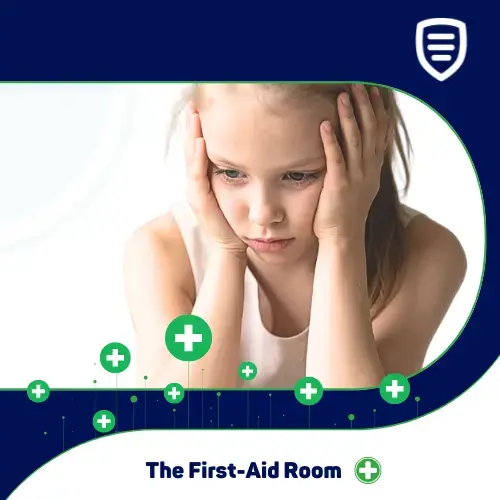
Hey, we’ve all been there, and it’s never nice to worry about things. Unfortunately, we all worry sometimes, and for many of us, that worry can grow to become overwhelming. And when it does, it can develop into an anxiety condition. Anyone can be affected by anxiety, and unfortunately, children are no exception.
Children’s health and wellbeing have worsened in recent years, with children in the UK facing some of the poorest health outcomes in Europe.
👉 30% of parents say their child suffered with anxiety or panic attacks in 2025.
👉 Children from the least well off households are 4 times more likely to experience mental health issues than those from the wealthiest homes.2
👉 In England, children aged 8–16 years with a probable mental health problem were 7 times more likely to have missed more than 15 days of school in the Autumn 2022 term.
👉 Children with a probable mental disorder were less likely to have positive views of school than those unlikely to have a mental disorder.
👉 The cost of persistent school absence, rising alongside poor mental health, exceeds £1 billion each year.
Anxiety isn’t the same for every child. It can take different forms, including:
Separation anxiety: children may worry about being away from their parents and have a hard time during school drop-offs and throughout the school day.
Social anxiety: children may be excessively self-conscious; in fact, 18% of parents report that their child has dealt with low self-esteem. Children who struggle with social anxiety may find it hard to socialise and worry excessively about how they are perceived by others.
Selective mutism: children affected by selected mutism may find it challenging to speak in certain settings, for example talking in front of a teacher or speaking in front of the class.
Generalised anxiety: children may worry excessively about a wide range of things. This can trigger perfectionism, and over worrying about grades.
Obsessive-compulsive disorder: children may experience intrusive, unwanted and stressful thoughts. To reduce their anxiety, they may engage in compulsive behaviours (or rituals), such as repeated counting or handwashing.
Phobias: Children may experience intense or irrational fears of specific things, such as animals, insects, or thunder.
In school, anxiety can manifest in several ways, which makes it difficult to identify in school, but there are some common indications:
Poor attendance: Children may refuse to go to school or find it hard to leave parents or carers at drop-off, avoid homework, while teenagers may skip classes altogether, leading to a poor attendance record.
Behavioural difficulties: Behavioural issues may also emerge and are not always immediately recognised as anxiety-related. A child or teenager “acting up” may in fact be a response to anxiety. Disruptive behaviour in the classroom, tantrums, or disproportionate reactions to minor changes (such as changes to the schedule) can all stem from underlying anxiety.
Difficulty concentrating and participating in class: Anxiety can make it hard for children to focus and engage during class. Speaking in front of the class or taking part in discussions may feel overwhelming, leading children to withdraw.
Frequent visits to the school nurse: Children experiencing anxiety may frequently visit the nurse with physical complaints such as headaches, stomach aches, or nausea, despite no clear medical cause.
Social withdrawal: Anxiety may lead children to isolate themselves and show reluctance to socialise with peers, take part in group work, or engage in collaborative classroom activities.
Of course, we know schools have limited capacity to address children’s anxiety on their own. Nevertheless, they are at the centre of young people’s lives and there are a number of approaches that can be implemented to support children experiencing anxiety:
➡️ Be available: Make sure pupils know that you and the wider team are there to listen if they have concerns, and share information about the support available in your school.
➡️ Teach pupils about anxiety: If they are old enough to understand, talk to pupils about anxiety - explaining that it is a natural response to stress that may affect our thoughts, feelings, and behaviours, sharing helpful coping strategies, and letting them know when to seek help - can help them better understand and manage their feelings, as well as empthise with others’.
➡️ Foster trusting relationships so students feel safe talking to you: Getting to know your students can help them feel more at ease at school and more comfortable approaching you when they need support.
➡️ Don’t make assumptions or dismiss feelings: If a child opens up about their worries, try not to make assumptions or dismiss how they are feeling. Being a child can be stressful too!
➡️ Foster a healthy learning environment: encouraging a supportive environment from school gates to classrooms and promoting positive relationships among pupils helps build an inclusive school setting where children feel safe. Feeling supported and included can play an important role in reducing anxiety.
➡️ Set clear expectations: Children with anxiety often feel more secure when they know what to expect. A structured routine at school, clear guidance around behaviour, learning, and consequences can help pupils feel safer, understand expectations, and reduce anxiety.
➡️ Involve families and professionals: Of course, schools are not expected to do it all on their own. Supporting children with anxiety requires a joined-up approach. Collaborating with parents, mental health professionals, school nurses, and colleagues can help build a clearer understanding of a child’s needs. Working with families and professionals also helps create a shared plan and practical resources to support both children and parents.
Ultimately, the best approach to supporting children with anxiety lies in creating a unified and coherent approach that brings together staff, pupils, and parents to foster an environment where children feel safe and supported. Small, consistent actions can make a meaningful difference in supporting children’s mental health and wellbeing.
Here is a resource designed to support your team in communicating with parents about childhood anxiety. This can be shared through staff and parent newsletters or other school communications.
👉 Childhood Anxiety Brochure - Guidance for Parents