


When school feels too much: understanding, recognising and supporting pupils with school anxiety
School should feel safe, predictable, and manageable. For most pupils, most of the time, it does. But for a growing number of children and teenagers,
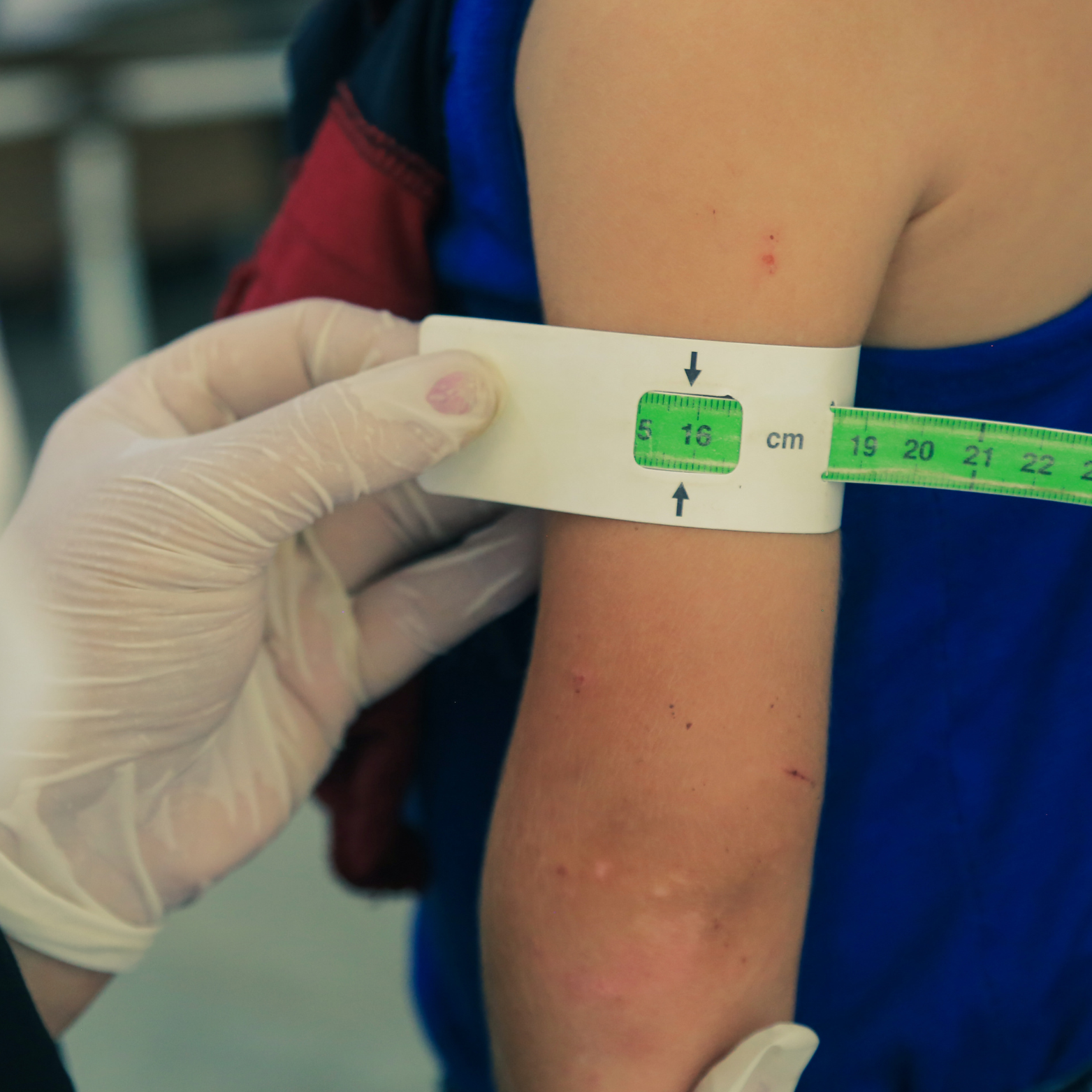

One aspect of our support for schools is continuing to emphasise the message that supporting pupil health isn’t just about managing injuries and illnesses; sometimes, the most significant indicators of a child’s wellbeing are in what they eat, or what they aren’t eating.
Schools play a crucial role in spotting early signs of malnutrition or an imbalanced diet, especially when pupils spend most of their day on site.
We know from our work with Kitt Medical that breakfast and lunchtimes can be the source of medical emergencies for students and staff. These peak times can also be crucial periods for schools to gain a deeper understanding of their students' health.
While hunger and nutrition can be sensitive topics, identifying issues early can make a massive difference to a pupil’s concentration, behaviour, academic potential, and long-term health.
Across the UK, child nutrition problems can stem from a range of factors: food insecurity at home, sensory needs, dietary restrictions, medical conditions, or simple fussy eating that has escalated over time.
Whatever the reason, your school is uniquely placed to notice when something doesn’t look quite right.
Spotting patterns early allows staff to:
🤝 Share concerns sensitively with safeguarding leads.
🤝 Signpost families to appropriate support.
🤝 Adjust in-school provision to help pupils access balanced meals.
Every child is different, but these indicators may suggest a pupil isn’t getting enough of what they need:
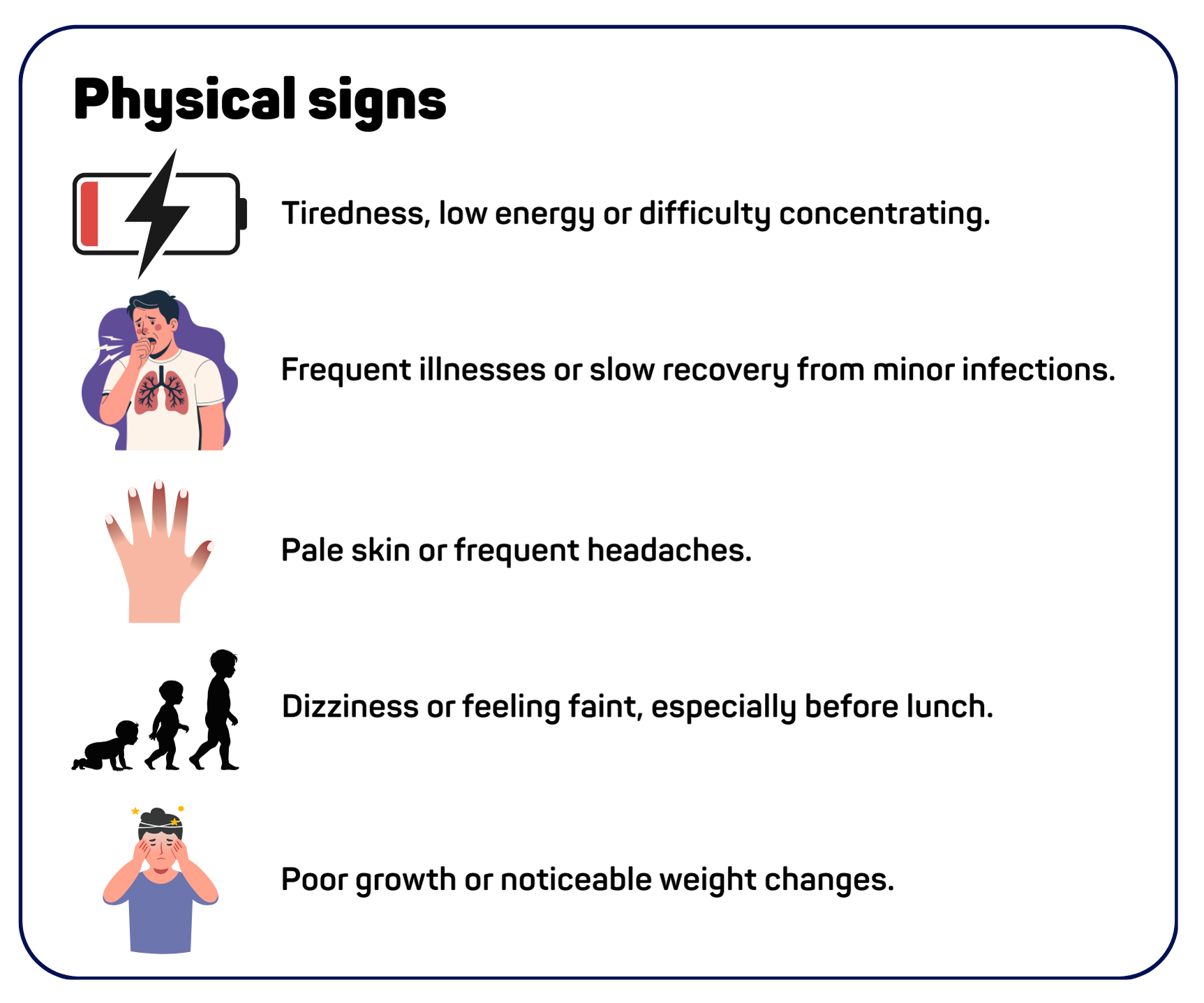
.png?width=740&height=616&name=LARGE_HUBSPOT_IN-EMAIL_IMAGES%20(11).png)
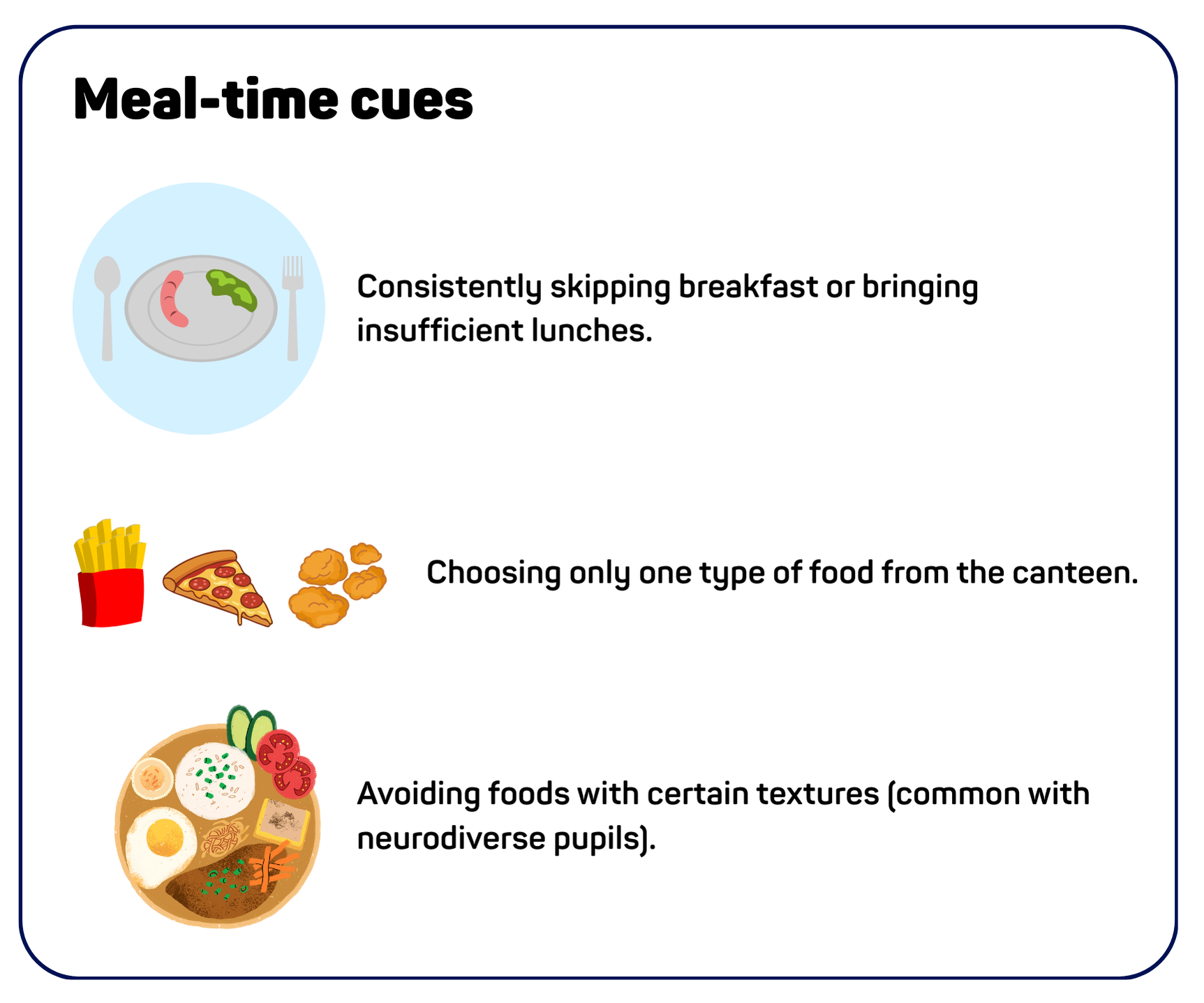
Recognising these signs doesn’t mean making assumptions — instead, it’s about building a fuller picture of a pupil’s wellbeing.
Not all nutrition concerns involve not eating enough. Some pupils may have adequate intake but lack key nutrients.
Possible indicators include:
➡️ Over-reliance on sugary snacks or energy drinks.
➡️ Complaints of stomach aches after lunch.
➡️ Difficulty staying alert in afternoon lessons.
➡️ Dry skin, brittle nails or hair thinning.
➡️ Constipation or irregular digestion.
Slight dietary imbalances can snowball into bigger issues if left unaddressed, especially for pupils with medical conditions like diabetes or coeliac disease.
You don’t have to be a nutritionist to make a difference. Here are practical, non-intrusive steps schools can take:
.png?width=1725&height=1438&name=LARGE_HUBSPOT_IN-EMAIL_IMAGES%20(10).png)
We're not suggesting that nutrition issues are about policing lunchboxes. It’s about understanding the minor signs that may point to a bigger picture.
With gentle awareness and supportive action, schools can help pupils stay healthy, focused, and ready to learn.
1. Pupil-friendly poster: “Spot the superpowers of healthy eating!”
A bright, simple poster for classrooms or corridors featuring:
- Energy = helps your brain focus
- Protein = helps your muscles grow
- Veg & fruit = helps you fight germs
- Water = keeps you alert
Add a friendly character or icons to make it fun and non-judgmental.
2. Staff checklist: “Nutrition red flags to watch for”
A printable A4 checklist listing:
- Physical signs
- Behaviour signs
- Meal-time patterns
- When to escalate to safeguarding
Perfect for first aiders, pastoral teams, or lunchtime supervisors.