


When school feels too much: understanding, recognising and supporting pupils with school anxiety
School should feel safe, predictable, and manageable. For most pupils, most of the time, it does. But for a growing number of children and teenagers,
8 min read
Alex Oselton
Jun 23, 2026, 6:00:01 AM
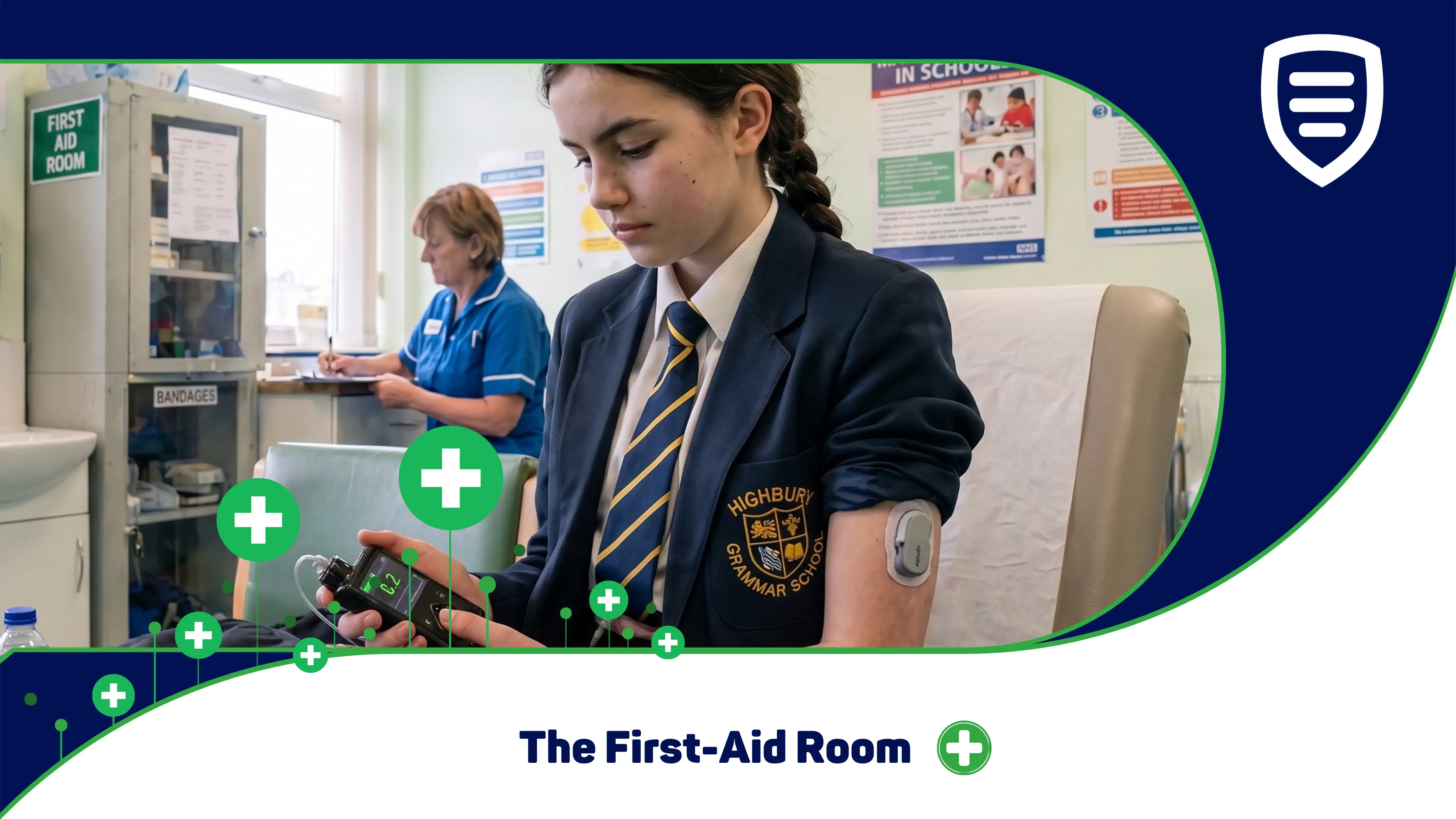
For school staff, some pupils' medical conditions require a little more planning than others. Diabetes is one of them.
Most pupils with diabetes manage their condition confidently and independently for much of the school day. However, blood glucose levels can change quickly, particularly around mealtimes, physical activity, illness, exams, or periods of stress.
A pupil with diabetes who seems unusually tired, irritable, confused, or unwell may not simply be having a bad day. Their blood glucose levels could be outside their target range, and they may require support.
❗ In 2019, Diabetes UK estimated around 36,000 children under the age of 19 lived with diabetes in the United Kingdom, up from 31,500 in 2015. (Royal College of Paediatrics and Child Health)
❗ Over 27,000 diabetes-related incidents were recorded on Medical Tracker in 2025.
❗ Diabetes is classified as a disability under the UK's Equality Act 2010. (Diabetes UK)
In this edition of The First-Aid Room, we explain how diabetes affects children and young people, explore the signs and common triggers of hypos and hypers, outline what staff should do in a diabetes-related emergency, and look at how schools can support pupils with insulin management, physical activity, school trips, and everyday school life.
Diabetes is a long-term condition affecting how the body manages blood sugar (glucose).
Type 1 is an autoimmune condition – meaning the body's immune system has attacked and destroyed the cells that produce insulin.
Many school-aged children with diabetes have Type 1 diabetes.
Type 2 diabetes occurs when the body either doesn't produce enough insulin or the insulin it does produce doesn't work properly. As a result, glucose builds up in the bloodstream rather than being used effectively for energy.
Although Type 2 diabetes is more common in adults, some children and young people are also diagnosed with the condition.
Insulin is a hormone that moves glucose from the bloodstream into the body's cells, where it's converted into energy. Without insulin, glucose stays in the blood and can't be used by the body.
Pupils with both Type 1 and Type 2 diabetes may need to monitor their blood glucose levels regularly. However, unlike Type 1 diabetes, treatment for Type 2 diabetes varies and may not always involve insulin.
Many pupils manage their diabetes themselves, but schools still play a crucial role in supporting them throughout the school day. School staff do not need to become diabetes specialists, but they should understand the signs that something may be wrong, as quick recognition of symptoms can help prevent a minor issue from becoming a life-threatening emergency.
🎯 Every pupil with diabetes should have an Individual Healthcare Plan. If you use Medical Tracker, you can easily create and update DfE-compliant Individual Care Plans for pupils with diabetes, and reminders can be sent up to four weeks before they are due for renewal.
Hypoglycaemia (sometimes shortened to “hypo”) can develop very quickly. It occurs when blood glucose levels fall below 4 mmol/L. While it usually affects people with diabetes, it can also occur in people without diabetes, although this is rare.
A hypo can be triggered by a range of events, many of which are a normal and unavoidable part of school life. Understanding common triggers can help staff recognise when a pupil may be at increased risk.
Too much insulin: if a dose of insulin is slightly too high, or if a correction dose has been miscalculated, there will be more insulin in the body than is needed to manage the glucose available. This can drive blood glucose levels too low. This can sometimes happen if a meal is smaller than expected or if a pupil has been more active than anticipated when the dose was calculated.
Missing or delaying a meal: when a pupil skips lunch, eats later than usual, or doesn't finish their meal, there may not be enough glucose in their bloodstream to balance the insulin already in their system. Even a short delay to a meal or snack can be enough to cause blood glucose to drop, which is why consistent mealtimes matter for pupils with diabetes.
Increased physical activity: exercise causes muscles to use glucose much more rapidly than usual, which can cause blood glucose levels to fall during or after physical activity. This means PE lessons, sports days, after-school clubs, or even an unusually active break time can all increase the risk of a hypo – sometimes hours after the activity has ended, not just during it.
Illness: while illness more commonly causes blood glucose to rise (as the body releases stress hormones), it can also lead to a hypo, particularly if a child is not eating or drinking normally due to nausea, vomiting, or loss of appetite. A pupil who is unwell and not managing food as usual should be monitored closely.
Unexpected changes to routine: diabetes management is built around patterns and predictability. When the school day doesn't go to plan – whether that's a cancelled lunch slot, an unplanned activity, a school trip, or even heightened excitement or anxiety – it can disrupt the balance between insulin and glucose in ways that are hard to anticipate. These disruptions, however, can significantly increase the risk of a hypo.
👉 Shaking or trembling
👉 Tingling lips
👉 Sweating
👉 Changes in vision, blurred vision
👉 Looking pale
👉 Hunger
👉 Feeling dizzy or light-headed
👉 Difficulty concentrating
👉 Confusion
👉 Feeling tired or weak, drowsiness
👉 Slurred speech
👉 Irritability or sudden changes in mood
👉 Anxiety or appearing unusually emotional
👉 Heart palpitations
Younger children may struggle to explain what they are feeling and may simply say they feel "funny" or "not right".
💡 Good to know: Every pupil experiences hypos differently. Some may recognise symptoms immediately, while others, especially younger children, may need support from staff to identify when their blood glucose is dropping.
Hypoglycaemic episodes can develop rapidly and should be treated promptly to prevent them from becoming more severe. Severe low blood sugar can cause seizures or loss of consciousness.
If a pupil reports symptoms of a hypo, follow their Individual Healthcare Plan and your school's medical policy.
In general, staff should:
✅ Stay with the pupil, offer reassurance and support.
✅ Help them access their blood glucose monitoring equipment, if appropriate, and check their blood glucose levels in line with their healthcare plan.
✅ Give the fast-acting glucose treatment specified in their healthcare plan. This may include glucose tablets, glucose gel, fruit juice, or another suitable sugary food or drink.
✅ Allow the pupil to rest in a calm, comfortable environment while their symptoms improve.
✅ Recheck the pupil's blood glucose levels after 10-15 minutes, if advised in their healthcare plan. If symptoms persist or blood glucose levels remain below the target range, provide further treatment as directed in their plan and continue to monitor them closely.
✅ Once the pupil has recovered and their blood glucose levels have returned to a safe range, provide any follow-up treatment, snack, meal, or longer-acting carbohydrate recommended in their healthcare plan to help prevent symptoms from returning.
✅ Ensure the pupil feels well enough before returning to lessons or other activities.
If symptoms do not improve, or if the pupil becomes unconscious, has a seizure, is not responding normally, or is unable to swallow safely:
Follow your emergency procedures immediately and call 999.
Stay with the pupil and continue to monitor them until help arrives.
Do not give food or drink to a pupil who is unconscious or unable to swallow safely.
If the pupil loses consciousness, place them in the recovery position.
If a glucagon injection is available and you have been trained to administer it, give it in accordance with the pupil's healthcare plan.
Hyperglycaemia (sometimes shortened to "hyper") happens when blood glucose levels become too high. While many may consider a blood glucose reading above 7 mmol/L before a meal to be a hyper, target ranges vary between individuals, so staff should always follow the pupil's Individual Healthcare Plan.
Unlike hypos, hypers usually develop more gradually and can go unnoticed for longer. Symptoms may not appear until blood glucose levels become quite high. Hypers are often less dramatic initially but can still become serious or even life-threatening if left unmanaged.
Much like hypos, a hyper can be triggered by a range of factors, many of which are an ordinary part of school life. Understanding what can cause blood glucose to rise may help school staff recognise when a pupil may be at risk, sometimes before symptoms become obvious.
Not enough insulin: if a dose has been missed, miscalculated, or the diabetes medicine is not working as effectively as it should, glucose can accumulate in the blood.
Illness or infection: when the body is fighting illness, it releases stress hormones that can cause blood glucose to rise.
Stress: emotional or physical stress has a similar hormonal effect, meaning exam pressure, anxiety, or even a difficult day can contribute to a hyper.
Eating too much sugary or starchy food: a larger-than-usual amount of carbohydrates without a corresponding adjustment to insulin can push glucose levels too high.
Being less active than usual: physical activity helps the body use glucose, so a less active day than normal can cause levels to rise.
Problems with insulin delivery: a blocked cannula, faulty insulin pump, or issues with an injection site can mean insulin isn't being delivered properly, even when the child appears to be managing their condition as usual.
Certain medicines may raise blood glucose levels as a side effect: this can temporarily affect how well a pupil's diabetes is managed.
👉 Excessive thirst
👉 Frequent trips to the toilet
👉 Tiredness
👉 Difficulty concentrating
👉 Headaches
👉 Blurred vision
👉 Dry mouth
👉 Nausea
👉 Stomach pain
👉 Feeling generally unwell
Because symptoms often develop gradually, staff may mistake a hyper for tiredness, dehydration, or a lack of concentration. A pupil may seem distracted, irritable, or simply not themselves. During this time, they may need additional flexibility in lessons, along with unrestricted access to drinking water, toilet facilities, and opportunities to monitor their blood glucose levels.
If a pupil is experiencing symptoms of a hyper, follow the guidance set out in their Individual Healthcare Plan.
In general:
✅ Stay calm and reassure the pupil.
✅ Allow unrestricted access to drinking water.
✅ Allow access to toilet facilities as needed.
✅ Encourage the pupil to check their blood glucose levels if appropriate and in line with their IHCP.
✅ Support the pupil in following any agreed diabetes management procedures.
✅ Monitor the pupil for any worsening symptoms.
Unlike a hypo, a hyper cannot usually be treated with sugary food or drinks. Instead, pupils may need to follow the actions outlined in their healthcare plan, which could include checking blood glucose levels, checking for ketones, or administering insulin.
💡 Good to know: From September 2026, schools will be required to support pupils' use of continuous glucose monitors and insulin pumps, including via mobile phone apps.
If symptoms of a hypo become more severe or the pupil develops signs of diabetic ketoacidosis (DKA), seek urgent medical assistance immediately.
DKA is a serious medical emergency that requires urgent treatment. Symptoms usually develop over 24 hours but it can happen faster.
DKA most commonly affects people with Type 1 diabetes, although it can also occur in people with Type 2 diabetes who require insulin treatment.
It may also be one of the first signs of undiagnosed Type 1 diabetes, particularly in children and young people.
Warning signs of DKA may include:
🚨 Feeling thirsty
🚨 Needing to pee more often
🚨 Blurred vision
🚨 Vomiting
🚨 Severe abdominal pain
🚨 Diarrhea
🚨 Breathing more deeply than usual
🚨 Breath that smells fruity (like pear drop sweets or nail polish remover)
🚨 Extreme tiredness
🚨 Confusion
🚨 Reduced consciousness
If a pupil has symptoms outlined in their healthcare plan that indicate DKA, seek emergency medical assistance immediately.
Many pupils administer insulin at school, either using insulin pens or insulin pumps. The level of support required from school staff varies from pupil to pupil and depends on their age, confidence, and Individual Healthcare Plan.
Schools should ensure:
✅ Staff understand the pupil's agreed diabetes management plan.
✅ Insulin is stored appropriately where required.
✅ Relevant staff know what support the pupil may need.
✅ Cover arrangements are in place for trips, sports activities, exams, and staff absences.
✅ Emergency contact information is up-to-date.
The aim should always be to help pupils manage their condition safely while remaining as independent as possible.
🎯 If your school uses Medical Tracker, you can manage stock levels of insulin and other medication, track expiry dates, and set reminders for replacement supplies. For medications brought into school by parents or carers, you can also send reminders when a new supply is needed.
Exercise can affect blood glucose levels before, during, and after activity. For pupils with diabetes, events such as sports days, swimming lessons, outdoor education activities, and school trips may require additional planning.
Practical steps include:
🏃 Checking healthcare pans before activities take place.
🏃 Ensuring glucose treatments are readily available.
🏃 Confirming staff know who has diabetes and what support they may require.
🏃 Making sure monitoring equipment accompanies the pupil.
🏃 Flexibility around snacks, drinks, and glucose testing.
A little preparation can help ensure pupils participate fully and safely.
🎯 On Medical Tracker, you can configure which staff member can access what information – so relevant members of your team have access to pupils' health information when they need it, without searching through paper files or asking the pupil to explain their own condition while unwell.
Diabetes is one of the most common long-term medical conditions seen in schools, but it doesn't need to be intimidating.
Understanding the difference between hypoglycaemia and hyperglycaemia, knowing the symptoms and being able to recognise when urgent action is needed can make a significant difference.
Most importantly, it helps pupils with diabetes stay safe, healthy, and fully included in school life.
School should feel safe, predictable, and manageable. For most pupils, most of the time, it does. But for a growing number of children and teenagers,
Welcome back everyone! September has a special energy to it. New faces, new classrooms, new routines... and a very long list of things to get done...
Last week, the Department for Education published new statutory guidance, Allergy Safety in Schools (July 2026).
For the first time, allergy safety...