


When school feels too much: understanding, recognising and supporting pupils with school anxiety
School should feel safe, predictable, and manageable. For most pupils, most of the time, it does. But for a growing number of children and teenagers,
Last week, the Department for Education published new statutory guidance, Allergy Safety in Schools (July 2026).
For the first time, allergy safety has been separated from general medical conditions guidance and given its own dedicated framework, highlighting the growing importance of allergy awareness, preparation, and whole-school responsibility.
For most schools, severe allergic reactions are thankfully rare. But when anaphylaxis does happen, every second matters. Unlike many first-aid situations, staff often have only a few minutes to recognise what is happening and respond appropriately.
Recognising the signs of anaphylaxis, knowing where adrenaline auto-injectors (AAIs) are stored, and feeling confident enough to use one can make a significant difference while waiting for emergency services to arrive.
In this edition of The First-Aid Room, we explain why allergy safety is receiving greater attention in schools, explore why regular refresher training is so important, highlight the key changes introduced by the new statutory guidance, and share practical steps schools can take to help keep pupils with allergies safe.
Supporting pupils with allergies is about more than simply knowing where an adrenaline auto-injector is stored.
While many pupils already have well-established arrangements in place to manage their allergies through Individual Healthcare Plans, the wider educational environment presents additional challenges. Lunchtimes, snacks, practical lessons, trips, celebrations, and changes to the daily schedule can all increase the risk of accidental exposure to allergens.
❗ In the UK, 40% of children have been diagnosed with an allergy. The four most common allergies in children are food allergy, eczema, asthma, and hay fever. Allergy UK
❗ Food allergy affects approximately 4% of preschool-aged children and 2.4% of school-aged children. Imperial College London
❗Schools are a common setting for severe allergic reactions. Approximately 17% of fatal food-induced anaphylactic reactions in school-aged children occur at school, and around one in five anaphylactic reactions managed in schools involve children with no previous history of food allergy. AllergyUK
❗In the United Kingdom, hospital admissions for food-induced anaphylaxis have more than tripled over the past 20 years. St John Ambulance
❗ Research by the Benedict Blythe Foundation in 2024 showed that 70% of schools in England did not have the recommended allergy safeguards in place. Benedict Blythe Foundation
These findings highlight why allergy awareness is an essential part of creating a safe learning environment. Clear policies, effective communication, and staff who feel confident recognising and responding to allergic reactions can help reduce risk and ensure that every pupil is supported throughout the school day. The aim is not to create unnecessary restrictions but to build an environment where pupils with allergies can participate fully, safely, and confidently in school life.
Many staff receive adrenaline auto-injector (AAI) training during their induction or as part of first-aid training. But one of the challenges of allergy management in schools is ensuring that staff remain confident in using adrenaline pens. As staff move into new roles, pupils join or leave the school, medication is replaced or expires, and time passes after training, knowledge and confidence can fade, making it more difficult to respond quickly in an emergency.
Regular refresher training, clear procedures, and a whole-school approach to allergy awareness help ensure that staff remain prepared to recognise allergic reactions and respond promptly and appropriately when a pupil needs help.
Regular refresher trainings help staff:
👉 Recognise the signs of an allergic reaction and anaphylaxis quickly.
👉 Know where emergency medication is stored.
👉Feel confident using an adrenaline auto-injector on a pupil.
👉 Remain familiar with different brands of adrenaline pens.
👉 Understand the school's allergy policy and allergy emergency procedures.
👉 Respond calmly when a pupil needs urgent help.
An emergency is not the time to be learning or remembering how an adrenaline pen works. Regular refresher trainings can make a significant difference to outcomes for the pupil and for the staff member responding.
💡 Good to know:
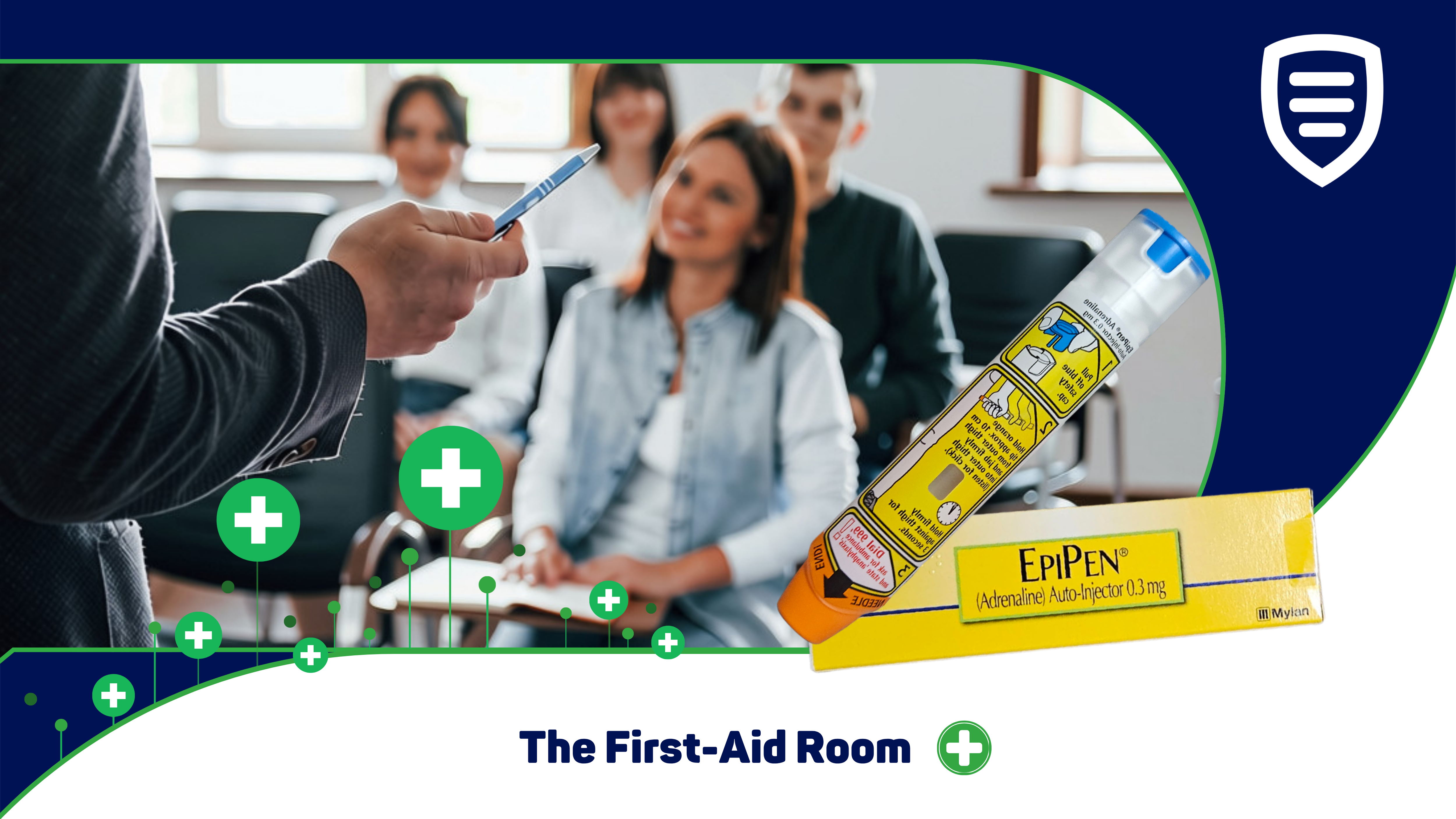
Several adrenaline auto-injectors are available in the UK, including branded devices such as EpiPen and Jext, as well as non-branded AAIs.
You may have encountered Emerade adrenaline pens in the past, but these have been recalled and discontinued by the Medicines and Healthcare products Regulatory Agency (MHRA) due to manufacturing faults.
Although adrenaline pens all deliver adrenaline, the way they are activated can differ. Schools should ensure staff members are familiar with the devices used by pupils in their care, feel confident to use them, and know where to find instructions and support if needed.
The new statutory guidance introduces some clear, mandatory requirements and a few notable shifts in approach that are worth highlighting:
Schools must have a dedicated allergy policy: this has to be separate from the wider medical conditions policy, published on the school website, and reviewed at least once a year.
A named senior leader will be responsible for allergy safety: the guidance is clear that this should not be the catering manager.
Individual Health Care Plans (IHPs) are reframed as non-clinical documents: Schools "hold the pen" on the plan itself, while healthcare professionals provide the clinical detail via attached Allergy or Asthma Action Plans.
"Nut-free" is out, "allergy aware" is in: The guidance discourages nut-free policies, warning that they create a false sense of security given how many allergens exist beyond nuts.
A "no blame" culture for incidents: staff who act in good faith during an emergency, including moments of hesitation or honest mistakes, will not face misconduct proceedings. That is an important reassurance for the people on the front line.
The DfE has signalled that further requirements are on the way, including mandatory stocking of spare adrenaline devices, mandatory allergy awareness training for all staff, and mandatory incident recording. These are not yet law, but schools that start preparing now will be in a much stronger position when they are.
You can read the full statutory guidance here or read our breakdown of what you need to know.
🎯 With Medical Tracker, Individual Healthcare Plans, medication records and expiry dates can all be managed in one place, and automatic reminders help ensure adrenaline auto-injectors and other emergency medicines are replaced before they expire, which is helpful for avoiding those last-minute scrambles at the start of the new term.
We are proud to partner with St John Ambulance to help make high-quality allergy and anaphylaxis training more accessible for schools. Through this partnership, schools can access a range of courses, including the following that are particularly relevant right now:
Anaphylaxis First Aid Course: a practical, hands-on course that helps staff recognise the signs of anaphylaxis and feel genuinely confident responding, including using an adrenaline auto-injector correctly.
Benedict's Law (Anaphylaxis) eLearning Course: a flexible online course designed to support schools in meeting the requirements of Benedict's Law, covering allergy awareness, emergency procedures, and IHCP management. Ideal for whole-staff rollout.
Both courses are suitable for all school staff, not just those with a first aid qualification.
Find out more about our partnership with St John Ambulance.
Good preparation does not just help pupils; it helps staff feel calmer and more capable when something unexpected happens. Here is a quick checklist of things worth reviewing before the summer break:
✅ Individual Healthcare Plans are up to date and reflect current medication.
✅ Adrenaline auto-injectors are in date and stored in a known, accessible location.
✅ All relevant staff know where emergency medication is kept.
✅ Cover arrangements are in place for trips and extracurricular activities.
✅ New staff have received or scheduled allergy awareness training.
✅ The school's allergy safety policy has been reviewed within the last 12 months and is published on the school website.
Because one in five anaphylactic reactions in schools involve children with no previous allergy diagnosis, allergy awareness is not just for staff who work with pupils who have known allergies: it is for everyone.
Thankfully, anaphylaxis is uncommon in schools. But when it happens, there is little time to think.
The best time to prepare for an allergy emergency is long before one happens. Regular refresher training, staff who feel confident to act, up-to-date healthcare plans and emergency medication, clear emergency procedures, and a strong whole-school culture of allergy awareness can make all the difference between hesitation and immediate action. Preparation starts now, and you're already doing it by reading this.
We've written extensively about allergic reactions and anaphylaxis during this academic year. The articles below provide practical guidance on allergies to help schools recognise allergic reactions, respond confidently to anaphylaxis, and support pupils with allergies throughout the school day.
elow are some practical resources to support your school's approach to allergy safety, covering food allergies, airborne allergens such as pollen, and the recognition and management of anaphylaxis. Together, they promote a joined-up, whole-school approach to recognising allergic reactions, responding appropriately to allergy-related emergencies, and supporting pupils with allergies throughout the school day.