


When school feels too much: understanding, recognising and supporting pupils with school anxiety
School should feel safe, predictable, and manageable. For most pupils, most of the time, it does. But for a growing number of children and teenagers,
6 min read
Alex Oselton
Jun 2, 2026, 6:00:00 AM
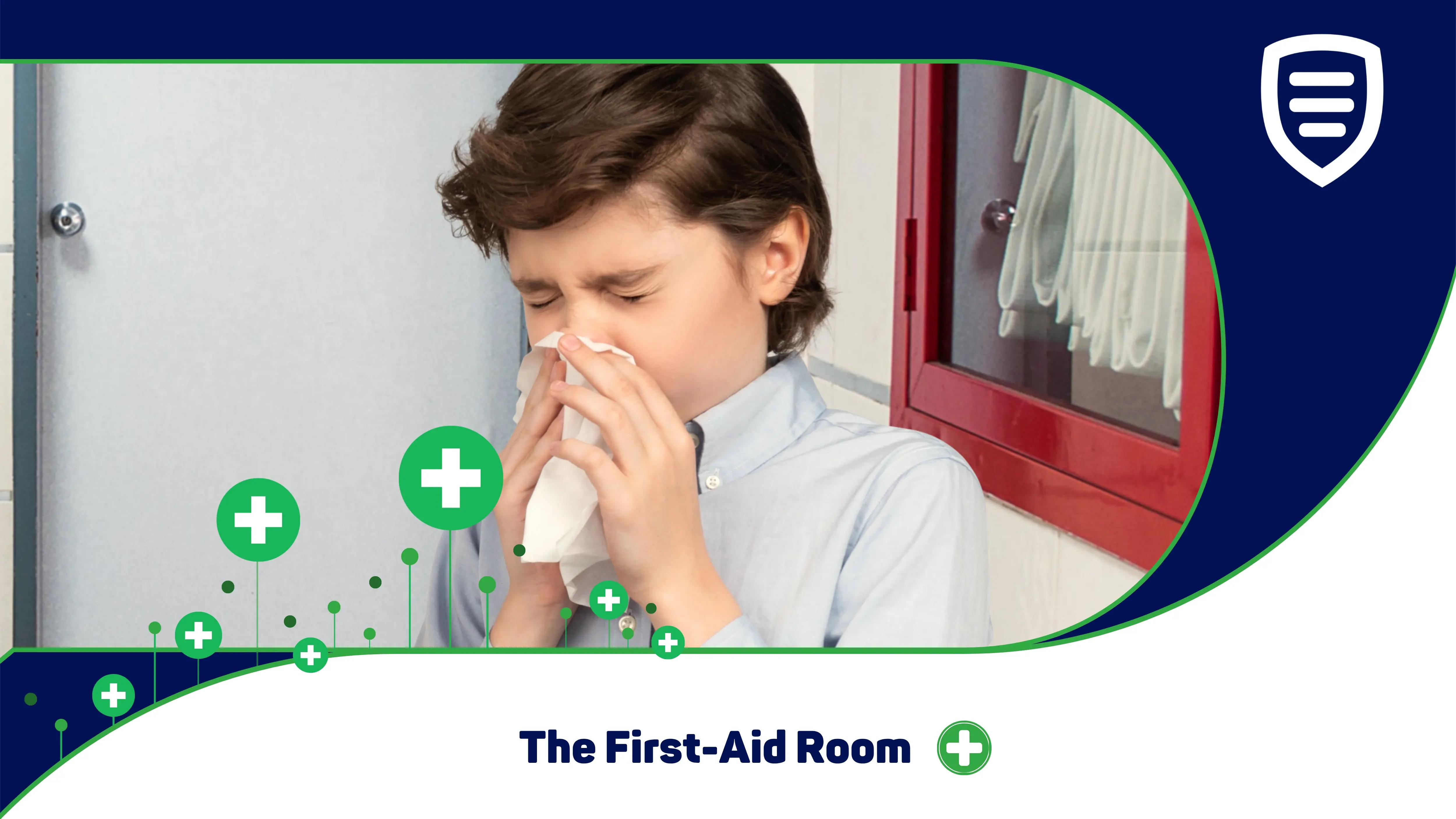
For school staff working through the final months of term, one familiar scenario usually shows up in the first-aid room: a pupil who feels unwell, but whose symptoms could be almost anything. Sneezing, a runny nose, tired eyes, and a headache. Is it hayfever? A summer cold?
It's a question that matters more than it might seem. Getting the answer wrong can affect how a child is supported throughout the school day, if their parents need to be contacted, and whether any underlying medical conditions need to be considered.
In this edition of The First-Aid Room, we look at what distinguishes hayfever from a summer cold, signs to watch for, and how school staff can respond when pupils present with overlapping symptoms.
Most people associate colds with winter, and with good reason: rhinoviruses – the most common culprits – spread mostly in cold, dry air. However, several other viruses circulate throughout the year, including enteroviruses, which are particularly active in summer and can cause cold-like symptoms in children.
Summer colds can be easily overlooked or dismissed, especially during peak pollen season. While schools are not expected to diagnose illnesses or medical conditions, a pupil sneezing repeatedly on a warm, sunny day is more likely to be told to take an antihistamine than to be assessed for a viral infection.
What is hayfever?
Hayfever is a common seasonal allergy. Also known as seasonal allergic rhinitis, it shares many symptoms with perennial (year-round) allergic rhinitis. Hayfever is triggered by pollen from grasses, trees, and weeds, typically during the spring and summer months.
🌿 Frequent sneezing: often in bursts, particularly after time outdoors or on high-pollen days. Children may sneeze repeatedly without warning.
🌿 Runny nose with clear, watery discharge – Younger children, in particular, may not recognise these symptoms as hayfever and instead simply report feeling generally unwell.
🌿 Itchy, red, or watering eyes: one of the most reliable indicators of allergic rhinitis in children. Pupils may rub their eyes repeatedly, which may worsen irritation.
🌿 Itchy throat or roof of the mouth: a common symptom of hayfever. Children may describe it as an "itch" or a "tickle" they can't get rid of.
🌿 Blocked or stuffy nose: can cause discomfort during the school day and may affect concentration, sleep, and appetite.
🌿 Mild fatigue or difficulty concentrating. Teenagers may attribute it to poor sleep rather than hayfever.
🌿 No fever: despite the name, hayfever does not raise body temperature. If a temperature is present, staff should consider a viral cause.
💡 Good to know:
Hayfever symptoms often persist throughout pollen season and are typically worse on warm, dry, and windy days, even when it's cloudy. They are also usually triggered or exacerbated by spending time outdoors. (NHS UK)
Symptoms do not improve after a week or two as a cold would, as pollen season generally lasts for about 9 months in the UK, running from late February/March through to November. (MetMatters, Royal Meteorological Society)
Summer cold symptoms in children and teenagers
A summer cold presents with many of the same symptoms as a common cold in winter. While colds are less commonly associated with warmer weather, they can still spread easily in schools and other busy environments.
Symptoms of a summer cold:
🤒 Sore throat: often the first symptom in school-age children. Younger pupils may complain of pain when swallowing or refuse food.
🤒 Loss of appetite: particularly common in primary-age children during the first few days of illness.
🤒 Runny nose that changes over time: starts clear and watery but typically becomes thicker and yellower after a couple of days.
🤒 Sneezing: present but usually less intense and less frequent than with hayfever.
🤒 Cough: common and can linger, particularly in younger children whose airways are more easily irritated.
🤒 Fever: more likely in younger children, teenagers may have little or no temperature.
🤒 Body aches and general discomfort: children may seem tearful, irritated, or reluctant to participate. Teenagers may describe feeling "run down" or unusually tired.
🤒 Symptoms worsen before improving: a summer cold typically peaks around days two to three and resolves within 7-10 days.If symptoms continue to worsen or fail to improve, it may be advisable to speak with parents about seeking advice from a medical professional.
💡 Good to know: Because hayfever does not cause a fever, iIf a pupil has a raised temperature alongside cold-like symptoms, a viral infection is far more likely than an allergic reaction.
When a child arrives at the first-aid room complaining of feeling unwell, a calm and structured approach will help you assess the situation accurately.
The following questions are a useful starting point:
Schools are not expected to diagnose medical conditions. However, where a pupil presents with a temperature, it may be appropriate to allow them to rest away from other pupils where possible and to contact their parents or carers.
Conversely, if a pupil's symptoms are consistent with hay fever and they have a known history of the condition, supporting them to manage their symptoms and continue with the school day may be entirely appropriate.
For pupils who have diagnosed hayfever, the summer term can be a genuinely difficult time. Pollen counts are highest on warm, dry, and windy days; precisely the conditions that accompany sports days, outdoor lessons, and end-of-term events.
Practical steps your school can take to support affected pupils:
✅ Check whether the pupil has a prescribed antihistamine or nasal spray, and that a valid consent form is in place for administration during the school day.
✅ Consider seating arrangements for pupils with severe hayfever. Seats near open windows may exacerbate symptoms on high-pollen days.
✅ On high-pollen days, allow pupils to stay indoors during break and lunchtime if symptoms are severe.
✅ Remind pupils not to rub their eyes, as this can worsen inflammation.
✅ Keep a note of which days symptoms are particularly bad: this can help identify patterns and inform conversations with parents. You can also check pollen forecast on the Met Office website, helping you prepare for periods of high pollen levels and support pupils who may be affected by hay fever.
🎯 If your school uses Medical Tracker, you can record hayfever as a managed medical condition and store details of any prescribed medication, including antihistamines and inhalers, alongside consent forms and administration records.
This means staff have the information they need at a glance, without searching through paper files.
Some pupils have both hayfever and asthma, a combination that can become more problematic during high-pollen periods. Allergic rhinitis can worsen asthma, and poorly managed hayfever has been associated with increased asthma symptoms.
For any pupil with a known asthma diagnosis, it is worth checking:
👉 That their reliever inhaler is in school and has not expired.
👉 Whether their symptoms have worsened recently, and whether parents are aware.
👉 That their individual healthcare plan is current and reflects their current medication.
💡 Good to know: From September 2026, Benedict's Law will require all schools to hold at least one spare adrenaline auto-injector (AAI) on site for emergency use. If you are reviewing emergency medication this term, now is a good time to ensure your school is prepared for this change.
We partner with Kitt Medical to improve the awareness and visibility of allergies and anaphylaxis across UK schools. Kitt Medical's Kitts are fully compliant with Benedict's Law.
The weeks around the summer term can be some of the busiest for the first-aid room, with sports days, trips, and transition events all adding to the usual daily incidents. It is easy for record-keeping to slip when workload is high, but accurate records matter, both for individual pupil safety and for the school's compliance position.
For every first-aid room attendance, record:
✅ The date, time, and name of the pupil.
✅ The symptoms presented and your observations.
✅ Any action taken, including medication administered, parents contacted, or decision to send home.
✅ The name of the staff member who attended.
🎯 With Medical Tracker, staff can log incidents accurately in under two minutes from any device. Records are stored securely and made available to the team members who need them, helping ensure nothing falls through the cracks. Whether it's a hayfever flare-up or a suspected summer cold, having a clear, accessible record means staff can quickly spot patterns and build a complete picture if a pupil returns with the same symptoms the next day.
Hayfever and summer colds may look alike, but they don't have to stump you. When symptoms overlap, the details matter. Fever or no fever. Itchy eyes or not. Gradual or sudden. That's usually enough to go on.
👉Summer Cold Symptoms – Staff Quick Guide
👉 Hayfever Symptoms – Staff Quick Guide
👉 Asthma and Hayfever Summer Checklist
School should feel safe, predictable, and manageable. For most pupils, most of the time, it does. But for a growing number of children and teenagers,
Welcome back everyone! September has a special energy to it. New faces, new classrooms, new routines... and a very long list of things to get done...
Last week, the Department for Education published new statutory guidance, Allergy Safety in Schools (July 2026).
For the first time, allergy safety...